Choosing among China’s leading Low Voltage Dc Motor manufacturers takes more than comparing catalog prices. A motor may look suitable on a datasheet, yet run hot or struggle under a real load. Buyers should compare rated voltage, torque, speed range, duty cycle, efficiency, and mounting dimensions. Ask for test reports and confirm how performance changes under continuous operation. Small details matter.
Drawing on the motor-design work of John F. Gieras, an electrical-machine researcher and author, a useful principle is: “Match the motor to the load, duty cycle, and thermal limits—not merely its rated voltage.” This is an editorial paraphrase, not a verbatim quotation. It reflects a practical selection habit: check the actual operating conditions before accepting a supplier’s recommendation.
This guide examines manufacturers through product range, engineering support, customization, quality controls, and communication. It also considers whether a supplier can explain its choices clearly. A responsive sales team is useful; documented specifications and consistent sample performance matter more. Look closely at shaft tolerances, noise, heat, and startup behavior. Then compare lead times and after-sales support. No supplier is right for every application. Some catalog claims may need independent checking, and that deserves attention. The goal is not to crown a winner from marketing language. It is to help buyers shortlist credible Chinese manufacturers and ask sharper questions before requesting samples or placing an order.
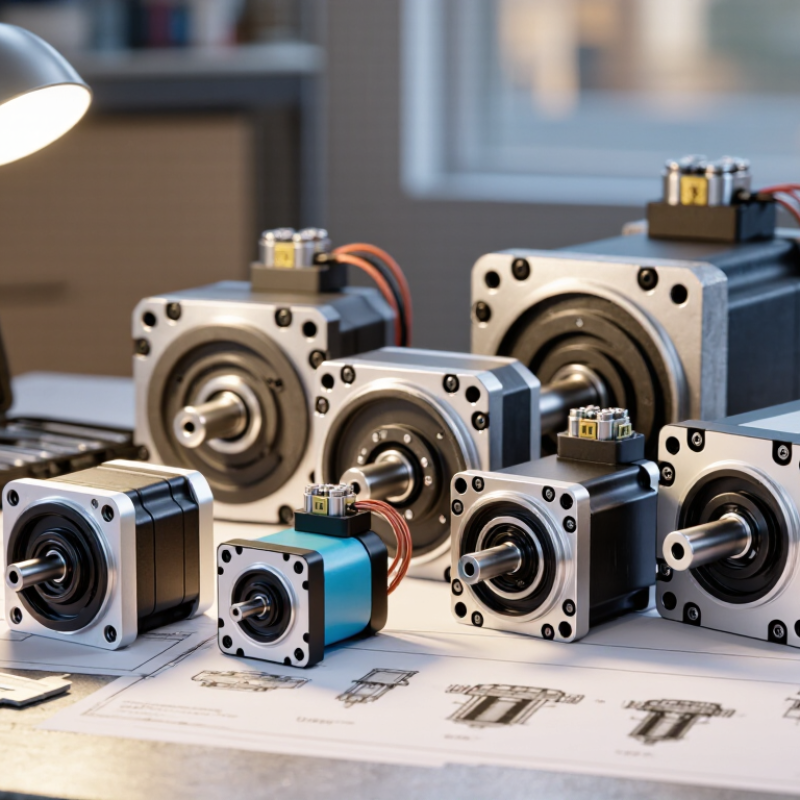
What Is a Low-Voltage DC Motor and How Does It Work?
A low-voltage DC motor converts electrical energy into rotary motion using direct current. Common systems use 12, 24, or 48 volts, though the exact definition of “low voltage” depends on the application. These motors appear in small pumps, conveyor drives, mobility equipment, and automated mechanisms. Their lower supply voltage can simplify system design, but it does not make every installation risk-free. Wiring, current capacity, and heat still matter.
Inside a brushed motor, current flows through rotor windings within a magnetic field. The interaction creates torque, while a commutator and brushes keep the rotor turning. Brushless designs use electronic controls to switch current between windings instead. Changing voltage or using pulse-width modulation can adjust speed, while the connected load affects current draw. A motor that slows under load may be undersized, poorly ventilated, or simply operating outside its intended range.
Tips: Check the motor’s rated voltage and stall current before choosing a power supply. Secure the motor firmly; vibration can loosen mounts over time. Keep airflow around the housing, especially during repeated starts. Small details matter. I would also verify the wiring diagram rather than assume every DC motor uses the same connections.
How China’s Low-Voltage DC Motor Industry Is Structured
China’s low-voltage DC motor industry is built from several connected layers, not just motor factories. Component suppliers provide magnets, copper wire, bearings, shafts, and electronic controllers. Motor manufacturers assemble these parts into brushed or brushless models for appliances, mobility equipment, pumps, and industrial devices. Some focus on standard products; others modify winding, shaft, or mounting dimensions for specific orders.
A further layer includes engineering firms and equipment makers that integrate motors into finished products. Exporters and trading companies may coordinate sampling, documentation, and shipping, while buyers handle testing and product design. The structure can make sourcing flexible, but responsibilities are not always clear. A supplier’s catalog rating may not match performance under a real load. Ask who controls design changes and production checks. Review sample results for speed, current draw, temperature rise, and shaft fit. Small differences matter.
Tips: Share voltage, duty cycle, load, and installation drawings before requesting a quote. Test a production-representative sample, not only a hand-picked unit. Keep records of revisions; specifications can drift between batches. A tidy datasheet helps, but it is not proof.
China’s Low-Voltage DC Motor Industry: Common Supply-Voltage Classes
Low-voltage DC motor supply chains typically include motor manufacturers, component suppliers, and system integrators. The chart shows common nominal DC supply-voltage classes—not manufacturer counts, market shares, or sales data.
Which Manufacturers Are Recognized in China’s Low-Voltage DC Motor Market?
China’s low-voltage DC motor market is best assessed through engineering evidence, not factory size alone. Recognized manufacturers typically show repeatable torque, speed control, thermal performance, and documented quality checks. The International Energy Agency’s analysis of electric motor-driven systems estimated that they use about 45% of global electricity. That figure covers motor systems broadly, not low-voltage DC motors specifically, but it explains why efficiency claims deserve close scrutiny.
For buyers, useful evidence includes load-test results, winding-temperature records, noise measurements, and consistency across production batches. IEC 60034 standards provide a reference for motor performance and testing, although compliance with a standard does not prove that every application will perform well. Ask how a motor behaves under frequent starts, variable loads, and limited cooling. Details matter. A compact motor inside a warm cabinet may face very different conditions from one running on an open test bench.
Market reports can identify China’s manufacturing scale, but public data rarely compare individual suppliers using identical test conditions. That is a real limitation. I would treat unverified efficiency figures cautiously and request test reports tied to the exact model and operating point. A supplier’s technical response can be revealing; still, polished documents are not the same as long-term field reliability.
How to Compare Manufacturers by Quality, Capability, and Certification
Choosing a low voltage DC motor manufacturer requires more than comparing advertised torque and price. Start with the actual duty cycle: supply voltage, starting load, speed range, operating hours, and ambient temperature. Ask for test data under conditions close to yours. A motor that performs well on a bench may behave differently inside a warm, enclosed machine. Details matter.
Quality is easier to judge when a supplier can explain its checks. Look for documented winding resistance, insulation, no-load current, vibration, and loaded performance tests. Request sample records and confirm that production units are traceable to their batches. Then assess capability: Can the factory support your volume, shaft dimensions, mounting changes, and predictable lead times? A polished sample is not enough. Sometimes buyers overvalue custom options before proving the standard design.
Certification should be checked carefully, not treated as a badge. Verify that certificates are current and cover the relevant factory, product range, and intended application. Ask how design changes are reviewed and whether test reports can be shared. A capable supplier should answer these questions clearly, while acknowledging limits. That conversation can be revealing. No checklist removes all uncertainty; I would still test a pilot batch under real operating conditions before committing to larger production.
Where China-Made Low-Voltage DC Motors Are Commonly Used
Where China-Made Low-Voltage DC Motors Are Commonly Used
China-made low-voltage DC motors are often found in equipment that needs compact, controllable motion. In warehouses, they can drive small conveyor sections, sorting rollers, and automated guided carts. Their 12V, 24V, or 48V supply options suit battery-powered machines and systems with limited installation space. You may also find them in adjustable beds, mobility equipment, compact pumps, and ventilation units. The right motor depends on more than voltage. Load, speed, operating time, and heat buildup all matter.
Tips: Check the motor’s rated voltage, current, torque, and duty cycle against the actual machine. Leave room for startup current, especially when a loaded mechanism begins moving. If the motor uses a gearbox, verify its output speed and mounting dimensions too. Small details matter.
In production settings, low-voltage motors can operate inspection fixtures, feeder mechanisms, and light-duty assembly equipment. They are useful where operators need repeatable movement without a large drive system. Still, “low voltage” does not automatically mean low risk of overheating or failure. A motor that runs briefly in a test may behave differently during a full shift. It is easy to focus on price or rated power and miss this point. Confirm performance under the real load, and review noise, vibration, and temperature during a trial.
Conclusion
A Low Voltage Dc Motor converts electrical energy into controlled mechanical motion using direct current, making it suitable for systems that require dependable performance at relatively low operating voltages. This article explains its basic working principles and describes how China’s manufacturing sector serves different needs, from standardized production to customized motor solutions. It also outlines the types of manufacturers found in the market without focusing on individual brands.
Readers will learn how to compare suppliers by examining product quality, engineering and production capabilities, consistency, and relevant certifications. The discussion also considers common applications, including automation equipment, small machinery, transport systems, and other devices that benefit from compact, efficient motion control. Together, these points offer a practical starting point for assessing China-made low-voltage DC motors and identifying options that match a project’s technical and operational requirements.
 TeTe Motor
