 TeTe Motor
China has become a major sourcing base for compact drive systems, including the Remote Control Gear Motor used in mobile robots, smart toys, shutters, valves, and automated equipment. Its manufacturing strength combines precision machining, electronics integration, and large-scale component supply. However, “top” should not mean the largest factory alone. It should reflect torque consistency, noise control, lifespan, safety testing, customization, and after-sales support.
Industry reports show steady demand. MarketsandMarkets has identified industrial automation and robotics as important growth areas for gear motor applications. Grand View Research also reports expanding demand for electric motors across automation, consumer devices, and mobility systems. These trends support China’s strong position, but market data can vary by product definition and research method. That limitation matters.
A reliable manufacturer should provide measured specifications, not only attractive catalog images. Buyers should check rated voltage, gearbox ratio, stall torque, no-load speed, duty cycle, encoder options, and operating temperature. A motor turning a small robotic wheel may need different protection from one operating a window actuator in humid conditions. Sample testing is essential. So is reviewing production evidence, such as ISO 9001 systems, batch inspection records, and relevant compliance documentation.
This guide will compare leading Chinese manufacturers through practical criteria. It will examine engineering experience, factory capability, customization, testing procedures, delivery performance, and communication quality. Some suppliers may appear impressive online but offer limited technical proof. That is a warning sign. No ranking stays perfect forever. New factories improve, established brands sometimes weaken, and published claims still require verification.
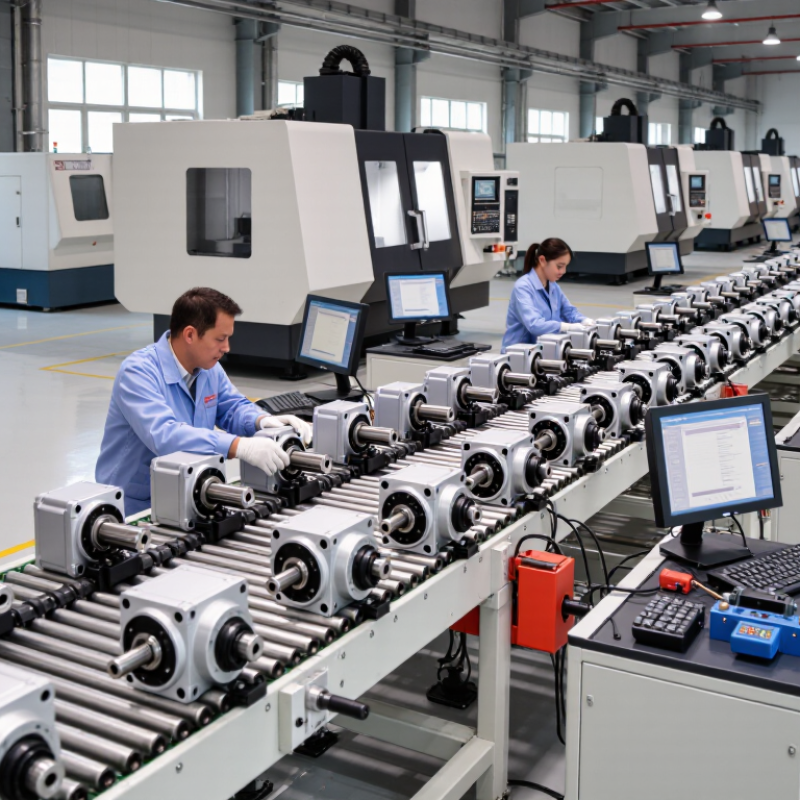
What Is a Remote Control Gear Motor?
A remote control gear motor combines an electric motor, reduction gears, and a control receiver. The receiver interprets commands from a handheld transmitter or digital controller. The gearbox then trades speed for torque, allowing a small motor to move heavier loads slowly and steadily.
A typical unit may drive a robotic arm, model vehicle, valve, or mobile platform. Its key specifications include voltage, rated torque, stall current, gear ratio, duty cycle, and backlash. A 12-volt motor with a 50:1 gearbox may deliver strong low-speed movement, but it can respond slowly. This trade-off is easy to overlook.
The International Energy Agency estimates that electric motor systems consume more than 50% of global electricity. That figure highlights the value of efficient motor selection and control. The International Federation of Robotics reported 553,052 industrial robot installations in 2022, showing the growing demand for precise motion systems. These figures do not measure remote control gear motors directly, so they should not be treated as market totals.
In practical selection, check the load at startup, not only during smooth movement. Measure current with the mechanism fully assembled. Add limit switches and thermal protection where failure could cause damage. Wireless control may also suffer from interference, delay, or lost signals. A motor can be powerful yet poorly matched. That remains a common engineering mistake.
| Data Dimension | Factual Information | Why It Matters When Evaluating a Manufacturer |
|---|---|---|
| Definition | A remote control gear motor is a geared electric motor operated through a wireless or wired control system. The gearbox reduces speed and increases output torque. | The motor, gearbox, controller, receiver, and remote transmitter should be evaluated as a compatible system. |
| Common Motor Type | Brushed permanent-magnet DC motors are widely used because they are compact, relatively simple to control, and available in low-voltage configurations. Brushless DC motors are used where longer service life and lower maintenance are required. | A capable manufacturer should offer the motor technology that matches the required operating life, noise level, efficiency, and control method. |
| Typical Supply Voltage | Common low-voltage options include 6 V, 12 V, and 24 V DC. The correct voltage depends on the battery, power supply, controller, and application requirements. | The manufacturer should verify voltage tolerance, connector type, current demand, and compatibility with the remote-control receiver. |
| Gear Reduction Ratio | Gear ratios can range from relatively low reductions for faster movement to high reductions for slow, high-torque movement. Common mechanisms include spur, planetary, worm, and helical gears. | The ratio affects output speed, torque, efficiency, noise, size, and whether the output can resist back-driving. |
| Output Speed | Typical geared DC motor output speeds may range from below 10 rpm to several hundred rpm, depending on motor speed, gear ratio, load, and supply voltage. | A reliable supplier should provide speed data under defined load conditions rather than quoting no-load speed only. |
| Output Torque | Available torque varies widely with motor size and gear ratio. Continuous torque, peak torque, starting torque, and stall torque are different values and should not be treated as interchangeable. | Torque ratings should include operating time, ambient temperature, output speed, and allowable radial or axial load. |
| Remote-Control Communication | Control may use radio frequency communication, infrared signals, Bluetooth, Wi-Fi, or a dedicated wired controller. Range and interference resistance depend on the communication technology and installation environment. | The supplier should specify operating range, pairing method, frequency requirements, response time, and behavior after signal loss. |
| Direction and Speed Control | A control circuit can provide forward and reverse rotation. Pulse-width modulation is commonly used to adjust the average speed of a DC motor. | The control system should be tested for smooth starting, reversing protection, speed response, and current limiting. |
| Feedback Options | Encoders, Hall sensors, limit switches, and potentiometers can provide position, speed, or travel feedback. Basic open-loop motors may operate without feedback. | Feedback is important for accurate positioning, synchronized movement, obstacle detection, and repeatable operation. |
| Duty Cycle | A motor may be rated for continuous, intermittent, or short-time operation. Thermal performance depends on load, speed, enclosure, ambient temperature, and cooling. | Duty-cycle testing helps prevent overheating, premature brush wear, lubricant failure, and gear damage. |
| Protection and Enclosure | Protection requirements depend on exposure to dust, water, chemicals, vibration, and outdoor conditions. Ingress protection should be specified using the applicable IP rating. | The enclosure, cable glands, connectors, and sealing method should be evaluated together; the motor rating alone may not represent the complete assembly. |
| Noise and Vibration | Noise is influenced by brush commutation, gear tooth profile, bearing quality, lubrication, housing stiffness, and operating speed. | Manufacturers should provide defined measurement conditions and samples for acoustic and vibration evaluation. |
| Mechanical Installation | Important dimensions include mounting-hole pattern, gearbox diameter, shaft diameter, shaft length, keyway or flat, connector position, and allowable shaft loads. | A complete dimensional drawing and tolerance specification reduce installation problems during product integration. |
| Safety Functions | Useful safety functions include emergency stop, over-current protection, thermal protection, end-of-travel limits, controlled restart, and fail-safe behavior after communication loss. | Safety requirements should be defined at the system level because a remote control, controller, and motor jointly determine risk. |
| Typical Applications | Common applications include small mobile equipment, automated curtains and blinds, adjustable furniture, valves, gates, educational robots, medical mechanisms, and battery-powered actuators. | Application testing should reproduce the actual load, travel, environment, duty cycle, and wireless operating conditions. |
| Manufacturer Qualification | Key evaluation points include documented specifications, engineering support, prototype testing, production consistency, traceability, inspection procedures, customization capability, and after-sales technical support. | A strong qualification process is more meaningful than comparing supplier claims based only on nominal voltage, speed, or price. |
It combines an electric motor, reduction gears, and a control receiver. The receiver interprets commands from a handheld transmitter or digital controller. The gearbox trades speed for torque. Small motor, heavier load.
They can drive robotic arms, model vehicles, valves, and small mobile platforms. They suit applications needing controlled, steady movement. They are not ideal for every mechanism.
A higher ratio usually increases torque and reduces speed. For example, a 50:1 gearbox may move slowly but strongly. Response can feel delayed. That trade-off is easy to miss.
Check voltage, rated torque, stall current, gear ratio, duty cycle, and backlash. Also review shaft design, mounting holes, connector type, and operating temperature. A complete specification sheet helps. Do not rely on one number.
Startup often requires more torque than smooth movement. Test the motor with the mechanism fully assembled. Measure current during acceleration and under resistance. A powerful motor can still be poorly matched.
Wireless signals can experience interference, delay, or signal loss. Walls and crowded radio environments may reduce response quality. Test fail-safe behavior and recovery after disconnection. Silence is not reliability.
Metal gears generally support heavier loads and repeated stress. Plastic gears can reduce weight, noise, and cost. The correct choice depends on load, cycles, and temperature. Metal is not automatically superior.
Request regular-production samples, torque-speed curves, test records, and tolerance data. Review aging tests, calibration records, batch traceability, and corrective actions. Check recent shipment evidence instead of trusting promises. Perfect suppliers do not exist.
A Remote Control Gear Motor combines an electric motor, a gear-reduction system, and remote operation capabilities to deliver controlled mechanical movement. China’s manufacturing industry offers a broad range of these motors, supported by mature supply chains, flexible production capacity, competitive pricing, and increasingly advanced automation technologies. Common product types include DC, AC, brushless, planetary, worm, and customized gear motors, each suited to different requirements for torque, speed, noise, size, and power consumption.
When evaluating Chinese gear motor manufacturers, buyers should examine engineering expertise, material quality, production consistency, testing procedures, customization capabilities, communication, and after-sales support. Important quality standards may include electrical safety, electromagnetic compatibility, energy efficiency, and environmental durability. Remote Control Gear Motor products are widely used in automated equipment, smart furniture, robotics, medical devices, security systems, toys, and other applications requiring reliable remote movement. Careful comparison of specifications, certifications, samples, and quality-control processes can help customers select a suitable and dependable manufacturing partner.
