7 Tips for Choosing the Right Precision Gear Motor?

Time:2026-09-19 Author:Isabella
0%

Selecting the right Precision Gear Motor is rarely a simple catalog decision. It affects positioning accuracy, noise, heat, service life, and the machine’s total operating cost. A motor may fit the shaft perfectly and still fail under repeated acceleration. That mistake is common.

Industry reports show why this market deserves closer engineering attention. Grand View Research’s Gear Motors Market Analysis highlights growing demand from robotics, factory automation, medical equipment, and electric mobility. MarketsandMarkets also identifies compact design, higher efficiency, and integrated control as important market directions. These trends sound encouraging, but they create stricter selection requirements. Small machines now demand large performance.

Eugen Elmiger, former CEO of maxon, has often emphasized a systems perspective: “The motor is only one part of the system.” That principle should guide every purchase. Torque is important. It is not enough. Buyers must examine load cycles, backlash, reduction ratio, thermal limits, mounting space, encoder feedback, and supplier support. Seven practical tips can make this process clearer, from defining the real duty cycle to checking test data and lifetime expectations. No selection guide is flawless. Datasheets can also hide assumptions. A careful engineer will question attractive numbers, request application evidence, and compare performance at actual operating temperatures. The best Precision Gear Motor is not always the smallest, cheapest, or fastest option. It is the one that remains predictable when the machine works hard.
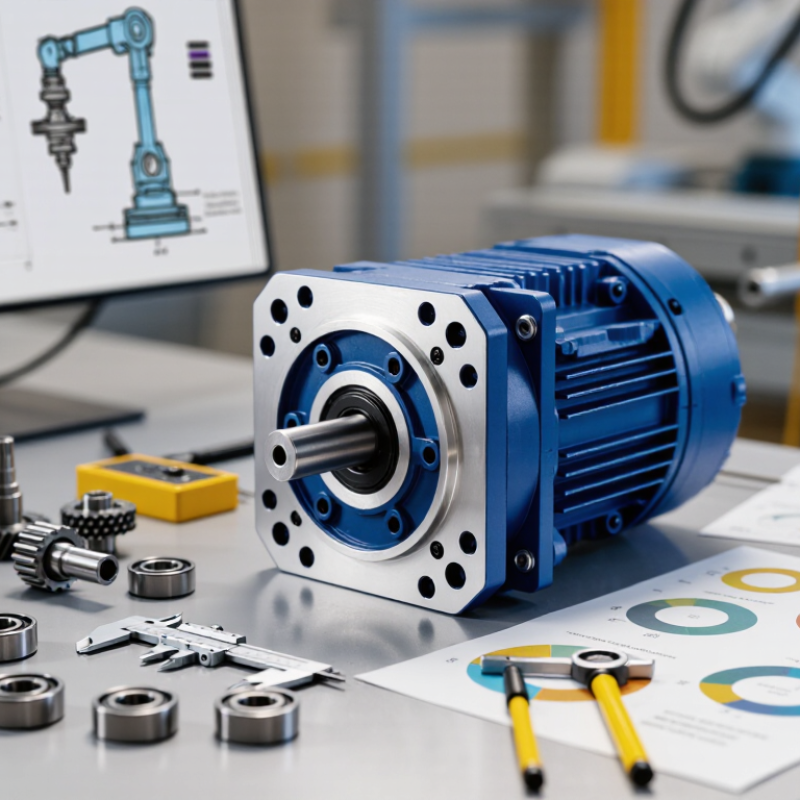
7 Tips for Choosing the Right Precision Gear Motor?

Define Load, Speed, Torque, and Duty Cycle Before Comparing Motors

7 Tips for Choosing the Right Precision Gear Motor

Define the application before comparing motor catalogs. Tip 1: Measure the actual load, including friction, incline, and starting resistance. Tip 2: Record required speed at the output shaft, not only the motor’s rated speed. A conveyor may need 30 revolutions per minute, while its motor spins much faster through reduction gearing. Tip 3: Calculate continuous and peak torque separately. A mechanism lifting 8 kilograms may require far more torque during acceleration. I have seen projects fail because designers used the average load alone.

Tip 4: Describe the duty cycle clearly. State operating hours, starts per minute, rest periods, and reversing frequency. Tip 5: Check whether the motor runs continuously or intermittently. Heat can build quietly. Tip 6: Include the gearbox efficiency when estimating input power. Ignoring efficiency creates optimistic calculations and undersized components. A simple spreadsheet helps, although it can still contain bad assumptions. Review every input against a real operating condition.

Tip 7: Compare precision requirements after defining these values. Consider backlash, positioning repeatability, noise, and allowable speed variation. A motor with excellent resolution may be unsuitable if its torque falls sharply at low speed. Test a prototype with the intended load, coupling, and controller. Measure temperature after several duty cycles, not only during a short demonstration. This step is often skipped. It should not be. Record the results, question unusual readings, and leave a practical safety margin for wear, contamination, and imperfect alignment.

Match Backlash to Motion Accuracy: From <1 Arcmin to 10 Arcmin

7 Tips for Choosing the Right Precision Gear Motor

Backlash is the lost motion you feel when a gear motor reverses direction. It directly affects positioning accuracy, repeatability, and image alignment.

Tip 1: Match the backlash rating to the motion task. Choose below 1 arcmin for fine inspection stages, laser alignment, or precise rotary indexing. Choose 3 to 5 arcmin for controlled automation. Around 10 arcmin may suit simple positioning with wider tolerances.

Tip 2: Do not judge backlash alone. Encoder resolution, shaft stiffness, mounting play, and control tuning also shape real accuracy.

Tip 3: Check the rating under working conditions. Load, temperature, speed, and lubrication can change results. A motor tested without torque may appear better than it performs in production.

Tip 4: Measure reversal error in both directions. Use a dial indicator or angular measurement device, then repeat the test after several cycles.

Tip 5: Consider the load inertia. A large, poorly balanced load can make a low-backlash gearbox behave unpredictably.

Tip 6: Leave a small safety margin. Selecting exactly 1 arcmin may be too optimistic when assembly errors are included.

Tip 7: Question unnecessary precision. A sub-1-arcmin motor can increase cost, stiffness demands, and tuning effort without improving the final machine. The specification may look impressive, yet the whole mechanism can still miss its target. Check the complete motion chain before choosing the gear motor.

Compare Gearbox Efficiency, Ratios, and Rated Torque at 24–48 VDC

7 Tips for Choosing the Right Precision Gear Motor

Compare Gearbox Efficiency, Ratios, and Rated Torque at 24–48 VDC

A precision gear motor should match the load, not just the catalog speed. At 24 VDC, a 240-watt load draws about 10 amps before losses. At 48 VDC, the current is roughly 5 amps. Lower current can reduce cable heating and controller stress. The U.S. Department of Energy estimates that motor-driven systems consume nearly 70% of industrial electricity. Small efficiency losses deserve attention.

Start with gearbox efficiency at the actual ratio and speed. A compact gearbox may claim 90% efficiency, but that figure can represent one test point. I have seen efficiency fall noticeably under light loads, high ratios, or poor lubrication. Check the test method and duty cycle. ISO 6336 calculations can help verify gear load capacity, while IEC 60034-30-1 supports consistent motor-efficiency classification.

Ratio selection also changes output torque, speed, backlash, and reflected inertia. A 20:1 ratio may provide strong holding torque, but it can respond more slowly. Rated torque must include acceleration, shock, and thermal duty. Do not confuse peak torque with continuous torque. The rated value should survive the operating temperature and duty cycle. It is easy to oversize the motor and still miss the real problem: excessive backlash. Measure the load profile, then compare continuous torque at 24–48 VDC. Datasheets help. They do not replace testing.

7 Tips for Choosing the Right Precision Gear Motor: Compare Gearbox Efficiency, Ratios, and Rated Torque at 24–48 VDC
Tip Selection Dimension Typical Engineering Data How to Compare Options Practical Selection Guidance
1 Match the DC voltage and operating range Common nominal systems include 24 VDC and 48 VDC. A suitable motor controller should support the motor's actual voltage range and transient conditions. Compare continuous voltage, allowable voltage tolerance, startup current, and controller compatibility. At the same mechanical output power, a 48 VDC motor generally draws about half the current of a 24 VDC motor. Choose 24 VDC where the available power system is standardized at 24 V. Choose 48 VDC when lower cable current, reduced voltage drop, or higher continuous power is important.
2 Select the required gear ratio from output speed Typical precision gearmotor ratios range from approximately 3:1 to 100:1. For a motor speed of 3,000 rpm, a 20:1 ratio gives an ideal output speed of about 150 rpm, before slip and load effects. Output speed ≈ Motor speed ÷ Gear ratio Use a lower ratio for faster motion and a higher ratio for slower motion with greater torque multiplication. Verify the actual no-load and rated-load output speeds rather than relying only on the nominal ratio.
3 Compare gearbox efficiency Typical total gearbox efficiency is approximately: 90–97% for a single-stage spur or helical design, 80–94% for a multi-stage design, and about 55–85% for a worm gearbox, depending on ratio, lubrication, and load. Output torque ≈ Motor torque × Ratio × Efficiency Compare efficiency at the intended operating point. A high ratio may increase output torque but can also add losses, heat, and reduced back-drivability.
4 Use rated torque, not only peak torque For low-voltage precision gearmotors, continuous rated output torque may commonly fall between 0.1 and 10 N·m, while short-duration peak torque can be higher. The correct value depends on motor size, reduction ratio, duty cycle, and thermal conditions. Required torque = Load torque × Service factor Select a continuous rated torque at least equal to the calculated running requirement. A service factor of approximately 1.25–2.0 is commonly considered for starting loads, shock, friction variation, and uncertainty.
5 Check output speed, load inertia, and acceleration Output speed should be checked under load because motor speed decreases as torque increases. High-inertia loads may require additional acceleration torque even when the steady running torque is modest. Compare rated speed, acceleration time, reflected inertia, and allowable start-stop frequency. For rotary loads, acceleration torque is related to inertia and angular acceleration: T = J × α Use a higher reduction ratio or a larger motor when fast acceleration, frequent reversing, or high reflected inertia causes the motor to operate near stall current.
6 Evaluate duty cycle and thermal limits Continuous operation produces more heat than intermittent operation. Common duty descriptions include continuous duty, intermittent duty, and periodic operation. Gearbox temperature, motor winding temperature, ambient temperature, and enclosure ventilation all affect usable torque. Compare continuous torque, intermittent torque, operating time per cycle, starts per hour, ambient temperature, and thermal derating requirements. Do not size a motor from peak torque alone. For continuous or high-cycle applications, use the continuous rated torque and confirm that the motor and gearbox remain within their allowable temperature limits.
7 Verify backlash, shaft load, and mounting requirements Precision gearboxes may specify backlash in arcminutes. Compact planetary and helical gearboxes often provide lower backlash than basic spur or worm arrangements, but actual values depend on construction and ratio. Radial and axial shaft-load ratings are separate from torque ratings. Compare backlash, repeatability, allowable radial load, allowable axial load, shaft diameter, mounting pattern, ingress protection, lubrication method, and expected service life. Choose low backlash for positioning and indexing. Confirm that external belts, gears, couplings, and overhung loads do not exceed the gearbox shaft-load limits.
Quick example: If a 24 VDC motor produces 0.25 N·m at 3,000 rpm and is paired with a 20:1 gearbox rated at 90% efficiency, the ideal output speed is approximately 150 rpm and the estimated output torque is approximately 4.5 N·m before accounting for motor speed reduction, temperature, and application-specific losses. Always confirm final values using the manufacturer's published test conditions and duty ratings.

Verify Thermal Limits, IP Ratings, and Continuous Duty Performance

A precision gear motor can meet its torque target and still fail in service.

The overlooked causes are heat, moisture, and an unrealistic duty cycle. During machine evaluations, check the motor at its actual load, speed, ambient temperature, and mounting position. A datasheet’s rated torque means little if the housing sits beside a heater or inside a sealed cabinet. Measure temperature, too. Use a thermocouple near the winding housing and record readings after several hours.

An IP rating describes protection against solids and water under defined test conditions.

IP65 may resist dust and water jets, but it does not prove resistance to immersion, chemicals, or condensation. Check connector seals, cable exits, shaft seals, and the mounting interface. Cold shutdowns can create internal moisture. That detail is easy to miss. For washdown equipment, confirm the cleaning pressure, water temperature, and exposure frequency match the rating.

Continuous duty requires more than a “continuous” label.

Confirm whether the rating applies to S1 operation, the stated ambient temperature, and the specified mounting arrangement. Compare continuous and RMS torque with the real motion profile, including acceleration and braking. Allow for heat from nearby drives or enclosed panels. One common mistake is trusting a brief bench test. Short tests hide heat buildup. Run a several-hour trial at the highest realistic load, then inspect temperature stability and output accuracy. If results are close, increase the safety margin rather than assuming the first calculation is perfect.

Assess Service Life Through L10 Bearing Life and Manufacturer Test Data

7 Tips for Choosing the Right Precision Gear Motor?

Assess Service Life Through L10 Bearing Life and Manufacturer Test Data

Service life starts with the bearing, not the catalog headline. ISO 281:2007 defines L10 life as the point where 10% of identical bearings may fail. Therefore, 90% should survive the stated rating. It is a statistical estimate, not a warranty. Calculate L10h using dynamic load rating, equivalent load, and operating speed. A 3,000-hour rating may fail quickly under shock loads or poor lubrication.

Look for evidence beyond calculated life. Ask for manufacturer test data showing load, speed, temperature, lubrication, duty cycle, and mounting conditions. A useful report should identify failure modes, sample size, and test duration. For example, testing at 60°C and continuous operation says little about a motor cycling between 20°C and 85°C. Small details matter. Very much.

Compare the test conditions with your machine. A conveyor carrying 12 kilograms may create higher bearing loads during acceleration than during steady travel. Check radial and axial loads separately. Also review backlash growth, gear wear, noise, and temperature rise. ISO 281 supports bearing-life calculations, while ISO 15243 helps classify bearing damage. These standards improve technical judgment, but they cannot replace field experience. I have seen impressive L10 figures become meaningless after misalignment and contaminated grease. That deserves honest scrutiny.

FAQS

What should be measured before comparing precision gear motors?

Measure the real load, friction, incline, and starting resistance. Record output-shaft speed, not only motor speed. A conveyor may need 30 revolutions per minute. Small details matter.

Why must continuous torque and peak torque be calculated separately?

Continuous torque supports normal operation. Peak torque covers acceleration, lifting, and sudden resistance. An 8-kilogram mechanism may need much more torque during startup. Average load can create a misleading design.

How should the duty cycle be described?

Record operating hours, starts per minute, rest periods, and reversing frequency. State whether operation is continuous or intermittent. Heat can build quietly. Short demonstrations may hide thermal problems.

How does gearbox efficiency affect motor selection?

Gearbox losses increase required input power and current. A claimed 90% efficiency may apply to only one test condition. Check the actual ratio, speed, load, lubrication, and duty cycle. A spreadsheet helps, but bad assumptions still produce bad answers.

What backlash level suits different motion tasks?

Below 1 arcmin may suit fine inspection or precise rotary indexing. Around 3 to 5 arcmin may suit controlled automation. About 10 arcmin may work for wider positioning tolerances. More precision is not always better.

Can low backlash alone guarantee accurate positioning?

No. Encoder resolution, shaft stiffness, mounting play, and tuning also affect accuracy. Measure reversal error in both directions. Use a dial indicator or angular measurement device. Test repeatedly.

How should a gear motor be tested under realistic conditions?

Use the intended load, coupling, controller, and mounting arrangement. Measure temperature after several duty cycles. Check speed, positioning error, noise, and reversal behavior. A short successful demonstration proves very little.

What changes when comparing motors at 24–48 VDC?

A 240-watt load draws about 10 amps at 24 VDC before losses. It draws roughly 5 amps at 48 VDC. Lower current can reduce cable heating and controller stress. Losses still matter.

How does the reduction ratio affect performance?

A 20:1 ratio can increase output torque and reduce speed. It may also slow response and increase reflected inertia. The ratio influences backlash, efficiency, and thermal behavior. Strong holding torque is not the entire answer.

What safety margin should be included during selection?

Leave room for wear, contamination, imperfect alignment, and assembly errors. Do not select exactly the published limit. Check continuous torque at operating temperature. Catalog values need practical skepticism.

Conclusion

Choosing the right Precision Gear Motor begins with clearly defining the application’s load, required speed, output torque, and duty cycle. These factors provide a practical foundation for comparing motor options and preventing underperformance or unnecessary oversizing. Motion accuracy should also guide the acceptable gearbox backlash, ranging from less than 1 arcminute for highly precise positioning to approximately 10 arcminutes for less demanding systems.

In addition, evaluate gearbox efficiency, available ratios, and rated torque under the intended 24–48 VDC operating conditions. Thermal limits, enclosure or IP ratings, and the ability to operate continuously are essential for reliable long-term performance. Finally, assess service life using L10 bearing-life calculations and available manufacturer test data. A well-matched motor should deliver the required motion, torque, durability, and operating stability while maintaining safe temperatures and consistent performance throughout its expected service life.

Isabella

Isabella

Isabella is a dedicated marketing professional with a sharp focus on driving brand growth and engagement through strategic content creation. With an extensive background in digital marketing, she combines her passion for storytelling with her keen understanding of industry trends to deliver......