Choosing the best DC brushless motor is critical for your project’s success. These motors are known for their efficiency, reliability, and longevity. However, selecting the right one can be challenging. With a myriad of choices available, it’s easy to feel overwhelmed.
Understanding your specific needs is essential. Consider factors such as torque, speed, and application. Each aspect influences the motor’s performance. For instance, a high-torque motor may be ideal for applications requiring heavy lifting. Conversely, a motor with a higher RPM is suitable for applications needing rapid movement. It is also vital to assess dimensions and weight limits due to space constraints.
Reflect on the features that are most important to you. Not all DC brushless motors are created equal. Some may offer advanced control features, while others may focus on cost-effectiveness. Your project criteria will guide you. This will ensure you make a wise investment. The perfect DC brushless motor can elevate your project, but careful consideration is key.
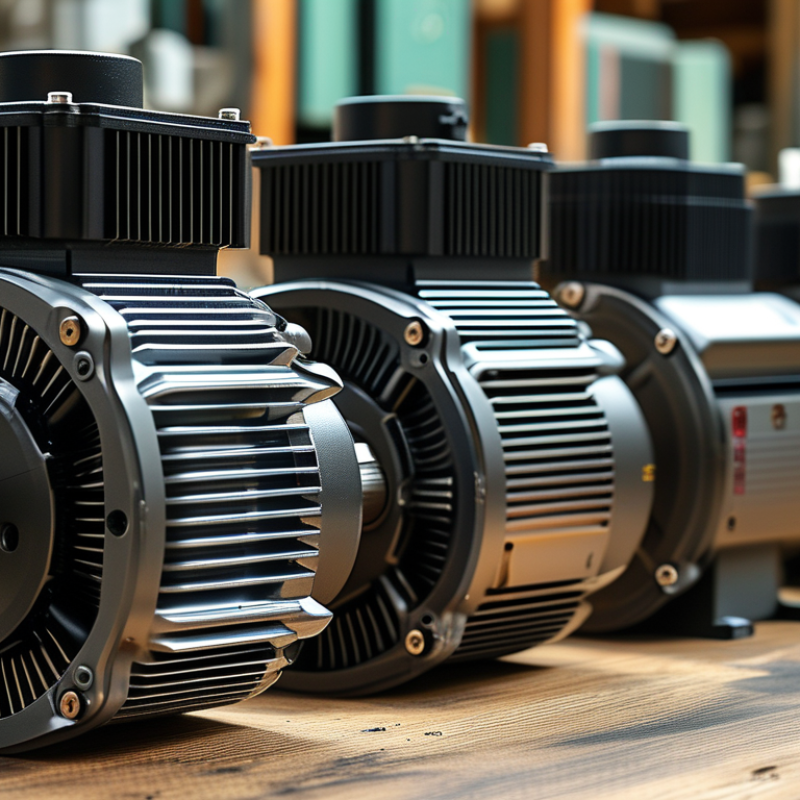
Understanding the Basics of DC Brushless Motors and Their Applications
DC brushless motors are becoming increasingly popular in various applications. Their efficiency and longevity make them suitable for many devices. Understanding their basic components is essential when selecting the right one. These motors typically consist of a rotor, stator, and electronic controller. The rotor is the moving part that creates torque, while the stator houses the coils. The controller manages the power supplied to the motor.
Applications for DC brushless motors vary widely. They can be found in electric vehicles, robotics, and HVAC systems. Their ability to perform in challenging environments adds to their appeal. However, not every motor fits every purpose. Consideration of size, power output, and RPM is crucial. For instance, a compact design may limit power. A mismatch can lead to inefficiencies and potential failures. Users should weigh these factors carefully.
Despite their advantages, brushless motors aren’t without challenges. Initial costs can be higher compared to brushed motors. Additionally, the complexity of the electronic controller may pose a learning curve. Relying on expert advice can greatly aid the selection process. Engineers and hobbyists alike must assess their specific needs. This ensures they choose the best motor for their applications.
Key Specifications: Voltage, RPM, Torque, and Efficiency Considerations
When selecting a DC brushless motor, understanding key specifications is essential. Voltage is one of the primary factors. Ensure the motor's voltage matches your system requirements. Too low can cause underperformance, while too high risks damage. Always check the voltage ratings before making a decision.
RPM, or revolutions per minute, indicates how fast the motor can turn. Choose a motor with the right RPM for your application. If your needs involve high speeds, look for higher RPM ratings. Consider torque too. This measures the motor's ability to perform work. A motor with insufficient torque may struggle under load, which can lead to efficiency losses.
Efficiency is crucial for minimizing energy consumption and maximizing performance. A more efficient motor converts more electrical energy into mechanical energy. Look for motors with high efficiency ratings for better long-term savings. However, efficiency can vary depending on the load conditions. Reflect on what load your application demands, as this will influence the overall choice. Consider this: selecting a motor isn't just about numbers. It’s about the right balance for your specific tasks.
Evaluating Motor Controllers and Their Impact on Performance
When selecting a DC brushless motor, the motor controller plays a crucial role in overall performance. A good motor controller ensures efficient communication between the motor and the power source. This helps to optimize speed and torque, making the system more responsive. Proper tuning of the controller settings can enhance motor performance significantly, adjusting parameters like acceleration and deceleration rates.
The impact of motor controllers is often underestimated. An inadequate controller can lead to subpar performance, such as stalling or overheating. For instance, if the controller isn't compatible, it may not handle the required current effectively. It's essential to evaluate controller specifications carefully. Look for features like regenerative braking and smooth start-up capabilities. These contribute to the longevity of both the motor and the entire system.
However, not every motor controller is perfect for every application. Some may require extensive programming or may not be user-friendly. This can lead to frustration for individuals who lack technical expertise. It's crucial to balance features with usability. The best choice often depends on specific project needs and the operator’s skill level. Reflecting on these factors will help streamline the selection process for optimal performance.
Applications: Choosing Motors for Robotics, HVAC, and Automotive Use
When selecting a DC brushless motor for robotics, it's crucial to consider torque, speed, and size.
Robotics often requires precise movements. A motor with suitable torque ensures efficient operation. Speed is vital for responsiveness. In compact robots, size becomes an issue. Often, smaller motors must deliver high power without overheating.
For HVAC applications, efficiency is key. Motors used here work long hours. They should minimize energy consumption while providing reliable performance.
Choosing an efficient motor can lower electricity bills. However, balancing efficiency with required airflow can be challenging.
In the automotive sector, robustness and durability are non-negotiable. Motors undergo various conditions, from extreme temperatures to vibrations. Selecting a motor that can withstand these stresses is essential.
However, challenges arise in matching performance with weight constraints. The complexity of automotive design demands close attention to every component.
Ultimately, the choice of motor must align with specific needs and conditions, making thorough evaluation essential.
Cost vs. Performance: Analyzing Budget and Long-Term Investment for Motors
When choosing a DC brushless motor, budget considerations often clash with performance needs. A lower cost motor may seem appealing upfront. However, cheaper options may lead to higher long-term costs due to inefficiencies and lower durability. Analyzing performance metrics can help you avoid this pitfall. Higher efficiency motors consume less power and may save money over time.
It's essential to consider the specific application. For instance, in robotics, precise control is critical. Investing in a motor that offers superior performance can enhance the overall project quality. Conversely, in simpler applications, a modest performance motor might suffice. This begs the question: Is it better to save a little now and risk future repairs?
When assessing options, review specifications and seek expert advice. Look for data on efficiency ratings, thermal ratings, and lifespan. While it may be tempting to go for the cheapest option available, remember that quality often dictates long-term satisfaction. Seek a balance between cost and performance that aligns with your needs. This reflection can ultimately lead to a more informed decision.
How to Choose the Best DC Brushless Motor for Your Needs? - Cost vs. Performance: Analyzing Budget and Long-Term Investment for Motors
| Motor Type |
Rated Voltage (V) |
Rated Power (W) |
Efficiency (%) |
Cost ($) |
Lifespan (hours) |
Noise Level (dB) |
| Model A |
12 |
30 |
85 |
50 |
5000 |
40 |
| Model B |
24 |
60 |
90 |
80 |
8000 |
38 |
| Model C |
48 |
100 |
92 |
120 |
10000 |
35 |
| Model D |
36 |
80 |
88 |
70 |
7500 |
42 |
FAQS
: Key factors include voltage, RPM, torque, and efficiency ratings. Each impacts performance directly.
The voltage must match your system. Low voltage causes underperformance, while high voltage risks damage.
Torque measures the motor's work capability. Insufficient torque can lead to struggles under load and efficiency losses.
Efficiency minimizes energy consumption. A more efficient motor converts more electricity into mechanical energy.
Key aspects include the motor’s torque, speed, and size. Precise movement often requires a careful balance.
HVAC motors run for long hours. Efficient models reduce energy consumption and lower electricity bills.
Motors must withstand extreme conditions. Balancing performance with weight limitations is often a complex task.
Lower-cost motors may lead to higher long-term expenses. Performance needs can clash with budget constraints.
Consider long-term performance. Quality and efficiency ratings can save money and enhance durability over time.
Reflect on your specific needs. Analyze specifications and seek expert advice to avoid potential pitfalls.
Conclusion
In the process of selecting the best DC Brushless Motor for specific applications, it is crucial to understand the fundamentals of how these motors operate and the various contexts in which they can be applied. Key specifications such as voltage, RPM, torque, and efficiency play a vital role in determining the most suitable motor for your needs. Additionally, evaluating motor controllers and their influence on performance is essential, especially in applications such as robotics, HVAC systems, and automotive uses.
Cost considerations align with performance requirements, making it necessary to analyze both immediate budget constraints and long-term investments when choosing DC Brushless Motors. By weighing these factors, users can make informed decisions that optimize performance while staying within budgetary limits, ensuring a balance between cost and operational efficiency.
 TeTe Motor
