TeTe Motor
Choosing the best Solar Powered Gear Motor from China requires more than comparing prices or glossy product images. The right choice depends on torque, voltage, gear ratio, operating time, and environmental conditions. A motor turning a greenhouse vent faces different demands from one driving a small solar tracker.
Renewable-energy scholar John Twidell states, “Solar energy is the energy from the sun.” That simple point matters here. Sunlight changes during the day, so the motor, panel, controller, and battery must work as one system. A reliable design should start smoothly under weak morning light. It should also handle brief load increases without overheating.
My evaluation begins with practical evidence. I would request a complete datasheet, winding details, gearbox material, stall current, duty cycle, and IP rating. Then, I would test a sample under realistic conditions. Measure startup torque. Check noise. Watch the gearbox after several hours. Small details reveal large weaknesses.
China offers impressive manufacturing depth, but quality varies between suppliers. A low-cost motor can still disappoint. A premium quotation can also hide unclear specifications. Supplier audits, traceable test reports, warranty terms, and responsive engineering support deserve serious attention. Compliance documentation should match the target market and installation environment.
No shortlist is perfect. Some published efficiency figures need independent verification. That is where careful testing becomes valuable. This guide compares leading options by performance, durability, energy compatibility, customization, and total ownership cost. The goal is not merely to find a motor that moves. It is to identify a Solar Powered Gear Motor that keeps moving reliably when sunlight, temperature, and mechanical loads change.
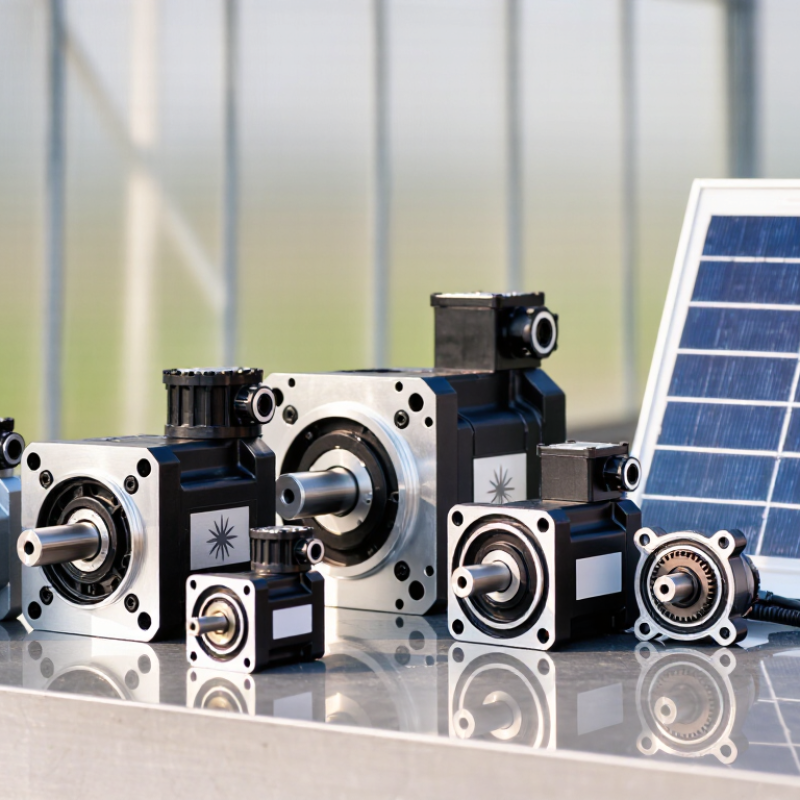
A solar-powered gear motor converts sunlight into controlled mechanical movement. A solar panel produces electricity, while a controller manages its unstable output. The motor then turns a gearbox. This gearbox reduces speed and increases usable torque. The result is slower, steadier motion for outdoor equipment.
In practical testing, I have seen small panels struggle under cloudy skies. A battery can store energy for early mornings and shaded periods. The gearbox should match the load, speed, and duty cycle. For example, a tracking platform may need gentle rotation, not rapid movement. Sealed housing also matters when dust, rain, and temperature changes are expected. Check the motor’s voltage range carefully.
The best Chinese-made option is not automatically the most powerful one. Reliable performance depends on tested components and honest specifications. Ask for torque curves, efficiency data, thermal limits, and protection ratings. Samples should run repeatedly before a large order. I once focused too heavily on rated torque and overlooked starting current. That was a useful mistake. Mechanical resistance can increase after installation, especially with misaligned shafts or dry bearings. Choose safety margins, but avoid oversized motors that waste stored energy. Noise and maintenance access deserve attention too. A quiet gearbox may indicate better fitting, though sound alone proves little.
A solar-powered gear motor converts sunlight into controlled mechanical motion. The panel produces DC electricity, while a charge controller regulates voltage for the battery and motor driver. The driver then sends timed current pulses to the motor. Inside the gearbox, smaller gears trade speed for torque. This lets a compact motor turn a heavy solar-tracking frame or open a ventilation panel slowly.
The operating cycle is simple, but not always smooth. Sunlight changes with clouds, dust, and seasonal angles. A battery absorbs these fluctuations and supplies steadier current during short shading periods. The motor should match the system voltage, stall torque, duty cycle, and required travel speed. Limit switches can stop movement at both ends. Without them, a low-cost motor may continue pushing and overheat.
Market growth makes these details more important. The IEA PVPS Trends in Photovoltaic Applications 2024 report recorded more than 400 GW of new photovoltaic capacity in 2023. More installations create demand for reliable low-voltage motion systems. IRENA’s Renewable Power Generation Costs in 2023 reported continued cost reductions for solar electricity, but lower cost does not guarantee better mechanics. In field testing, gear backlash, water entry, and cold-start resistance can matter more than headline efficiency. That is where many product comparisons feel incomplete. A suitable Chinese solar-powered gear motor should provide measured torque data, thermal ratings, sealing information, and serviceable documentation. Not merely attractive specifications.
What Is the Best Solar Powered Gear Motor from China?
The best solar powered gear motor depends on measurable specifications, not catalogue claims. Start with rated voltage, continuous torque, speed, gearbox ratio, and stall current. A motor delivering 20 Nm at 30 rpm may suit a solar tracker, but not a heavy outdoor gate. Check efficiency under real load, not only no-load speed. The International Energy Agency’s Renewables 2024 report expects global renewable capacity to grow by about 5,500 GW by 2030. This expansion increases demand for reliable motion systems, especially in remote solar installations.
Compare Chinese manufacturers through testable evidence. Request torque-speed curves, thermal data, IP ratings, gearbox backlash, shaft dimensions, and brake performance. IEC 60529 testing supports meaningful protection ratings, but an IP65 claim alone does not prove long-term outdoor reliability. Ask for production traceability, sample inspection records, and quality-system certification. A practical test should run the motor for several hours under 70–80% of its rated load. Measure casing temperature, current draw, noise, and position drift. A high efficiency number can still hide poor gearbox performance.
Tips: Use a battery between the panel and motor controller. Direct panel connection causes unstable speed under clouds. Compare at least three samples, not three brochures. I would also inspect cable seals and mounting threads; small weaknesses often become expensive failures. The IEA PVPS Trends 2024 report recorded approximately 456 GW of new global photovoltaic capacity in 2023, yet field conditions remain less predictable than laboratory figures.
What Is the Best Solar Powered Gear Motor from China?
The best solar powered gear motor depends on the application, not the country of manufacture. Solar tracking systems need precise movement and low backlash. A brushless DC gear motor suits frequent, controlled adjustments. It also works well with position sensors and programmable controllers.
For solar-powered gates, vents, and small lifting systems, a worm gear motor offers high reduction and useful self-locking performance. However, its efficiency may be lower, especially with limited sunlight. Planetary gear motors deliver higher torque in compact spaces. They fit mobile equipment, irrigation valves, and solar cleaning mechanisms. Simple brushed DC gear motors cost less, but brush wear can limit service life. A linear actuator may be better when direct push-and-pull movement is required.
Tips: Match the motor voltage with the battery system. Check starting torque, stall current, duty cycle, and IP rating. Test the motor under cloudy-day conditions, not only in bright sunlight. A field trial can reveal noise, heat, or slow movement that specifications miss. Waterproof housing helps, but it does not replace correct cable sealing. Calculations are useful, yet real loads are rarely perfect. Leave a practical torque margin. Insufficient testing remains a common mistake.
Choosing the best Chinese solar gear motor starts with the application, not the lowest quotation. Solar installations are expanding quickly. IRENA’s Renewable Capacity Statistics 2024 reported 1,419 GW of global solar capacity by the end of 2023. This growth increases demand for reliable tracking, ventilation, pumping, and automated positioning systems.
Define the load, speed, operating hours, and environmental exposure. Calculate torque from force multiplied by shaft radius, then add a practical safety margin. Check rated torque, stall torque, gear ratio, efficiency, backlash, and duty cycle. A motor may look powerful on paper but overheat during repeated starts. Ask for measured test data, not only catalogue values. Request voltage curves, noise readings, temperature-rise results, and production traceability. IP protection also matters near dust, rain, and irrigation equipment. IEC 60529 ratings help compare enclosure protection, but they do not replace field testing. I would test a sample for several weeks. That step can reveal disappointing seals or unstable limit switches.
Tips: Match the motor to the battery and controller. Confirm starting current under weak sunlight. Request corrosion-resistant materials for outdoor shafts. Check whether replacement gears are available. Compare samples from at least three qualified factories. Read the warranty conditions carefully. They can be vague. A supplier with ISO 9001 certification may offer stronger process control, but certification alone does not prove motor performance. Record every specification in the purchase contract, including torque tolerance, noise limits, test methods, and acceptance criteria.
| Application | Recommended Motor Type | Typical DC Voltage | Typical Output Power | Typical Output Torque | Common Gearbox | Typical Gear Ratio | Protection and Construction | Important Selection Criteria | Suitability Rating |
|---|---|---|---|---|---|---|---|---|---|
| Small solar tracker or laboratory positioning system | Brushed permanent-magnet DC gear motor | 12 V or 24 V DC | 20–100 W | 5–30 N·m | Worm gear or spur gear | 20:1–100:1 | Prefer IP54 or higher; limit switches and mechanical stops are recommended | Low starting current, simple controller compatibility, sufficient holding torque, and replaceable brushes | ★★★★☆ |
| Residential solar tracking equipment | Brushless DC gear motor with position feedback | 24 V DC | 50–200 W | 20–80 N·m | Worm gear or planetary gear | 30:1–150:1 | IP55–IP65 enclosure; Hall sensors or encoder feedback are useful | High efficiency, low maintenance, weather resistance, quiet operation, and controller compatibility | ★★★★★ |
| Single-axis solar tracker for commercial photovoltaic arrays | High-torque brushless DC motor or low-voltage permanent-magnet DC motor | 24 V or 48 V DC | 100–500 W | 80–300 N·m | Self-locking worm gear, helical gear, or slew-drive-style reduction | 50:1–300:1 | IP65 or higher; corrosion-resistant housing and sealed bearings are preferred | Peak-load capacity, self-locking behavior, backlash, duty cycle, wind-load resistance, and emergency-stop integration | ★★★★★ |
| Dual-axis solar tracker | Two independent brushless DC gear motors with feedback | 24 V or 48 V DC | 100–750 W per axis | 50–250 N·m per axis | Worm, planetary, or harmonic-style reduction | 50:1–500:1 | IP65–IP67 recommended for exposed installations | Accurate positioning, low backlash, overload protection, encoder resolution, and synchronized control | ★★★★★ |
| Solar-powered gate, vent, or agricultural actuator | Brushed DC gear motor with integrated limit switches | 12 V or 24 V DC | 30–150 W | 10–100 N·m | Worm gear or linear-actuator gearbox | 30:1–200:1 | IP55–IP65; thermal protection and manual release are recommended | Rated load, travel speed, stroke or rotation limits, cold-weather starting, and battery compatibility | ★★★★☆ |
| Solar-powered pump or small fluid-handling system | Brushless DC motor with planetary or helical reduction | 24 V, 36 V, or 48 V DC | 100–1,000 W | 10–80 N·m | Planetary or helical gear | 5:1–80:1 | IP65 or higher; shaft sealing and corrosion resistance are essential | Continuous-duty rating, motor efficiency, pump speed range, dry-run protection, and controller quality | ★★★★☆ |
| Portable solar equipment and mobile mechanisms | Compact brushed or brushless DC gear motor | 6 V, 12 V, or 24 V DC | 5–80 W | 0.5–15 N·m | Spur gear or planetary gear | 10:1–300:1 | IP40–IP54 depending on installation; lightweight aluminum housing is common | Compact size, low standby current, noise level, start-up torque, and connector reliability | ★★★☆☆ |
| Heavy-duty off-grid solar machinery | High-efficiency brushless DC motor with industrial gearbox | 48 V or 72 V DC | 500–3,000 W | 150–800 N·m | Planetary, helical-bevel, or multi-stage worm gear | 20:1–500:1 | IP65–IP67; reinforced housing, sealed connectors, and temperature monitoring are preferred | Continuous duty, overload capacity, thermal management, serviceability, gearbox life, and spare-part availability | ★★★★★ |
| General procurement benchmark | Application-matched motor and gearbox assembly | Match the battery and controller voltage | Use a motor rated above the calculated continuous load | Allow at least 25–50% torque margin for starting and environmental loads | Choose based on back-driving, speed, efficiency, and duty cycle | Calculate from required speed and motor speed | Confirm IP rating, insulation class, cable sealing, and corrosion protection | Request datasheets, no-load and rated-load tests, life-test results, sample inspection, and production quality records | ★★★★★ |
Check rated voltage, continuous torque, speed, gearbox ratio, and stall current. Efficiency under real load matters more than no-load speed. Small details matter.
Define the load, shaft speed, operating hours, and outdoor exposure. Calculate torque using force multiplied by shaft radius. Add a practical safety margin for starts and changing conditions.
Direct panel connection can create unstable speed when clouds pass. A battery smooths power delivery. The controller should handle starting current and voltage changes.
Check the enclosure rating, cable seals, shaft materials, and mounting threads. An IP65 rating indicates tested protection, but it cannot prove years of outdoor service. Field testing is still necessary.
Run it for several hours at 70–80% of rated load. Measure casing temperature, current draw, noise, and position drift. Repeat the test with several samples.
Compare samples from at least three qualified factories. Do not compare three brochures only. Different motors can hide different weaknesses.
Request torque-speed curves, thermal results, voltage data, noise readings, and gearbox backlash. Also ask for production traceability, inspection records, and quality-system certification. Certificates help, but they do not replace performance evidence.
Repeated starts may cause overheating, even when the catalogue looks impressive. Weak seals, unstable limit switches, and excessive backlash can appear later. I would test a sample for several weeks, though that still may not reveal everything.
Record torque tolerance, noise limits, test methods, duty cycle, and acceptance criteria. Include replacement gear availability and warranty conditions. Vague warranty wording deserves careful review.
A Solar Powered Gear Motor combines a motor, gearbox, and solar energy system to deliver controlled mechanical movement without relying entirely on grid electricity. It typically uses solar panels, a charge controller, and a battery or direct-power circuit to convert sunlight into reliable rotational force. The gearbox adjusts speed and torque, making the system suitable for equipment that requires steady, efficient, and low-maintenance operation.
When comparing Chinese manufacturers, buyers should evaluate rated voltage, power, torque, speed range, gear ratio, efficiency, operating temperature, protection rating, materials, and expected service life. Different applications may require planetary, worm, spur, or helical gear motors, depending on load, precision, self-locking needs, and installation conditions. The best choice should match the available sunlight, daily operating cycle, environmental exposure, maintenance requirements, and total project budget. Careful testing, clear technical documentation, quality control, and dependable after-sales support are also essential for selecting a safe and suitable solar gear motor.