Choosing the right Miniature Gear Motor can determine whether a precision device feels refined or frustrating. Small errors become visible when a camera lens hesitates, a robotic gripper overshoots, or a medical pump delivers uneven flow. This guide examines seven leading options for precision applications, focusing on torque, speed control, backlash, efficiency, noise, durability, and integration requirements.
As Eugen Elmiger, former CEO of maxon, has observed, “Precision is not a feature; it is the result of every detail working together.” That principle matters with miniature drives. A compact motor may offer impressive torque, yet still perform poorly under changing loads. Gear ratio, encoder feedback, thermal limits, and mounting accuracy deserve equal attention. Specifications alone can mislead.
The selected motors represent different engineering priorities. Some favor smooth motion and low backlash. Others provide stronger holding torque or better resistance to repeated cycling. Testing conditions also vary, so direct comparisons require caution. A motor rated for laboratory equipment may not suit a dusty actuator or a battery-powered instrument. Real-world results depend on the gearbox, controller, load profile, and assembly process.
There is no universal winner.
This overview combines manufacturer specifications with practical selection criteria used in automation and precision-mechatronics work. It also highlights limitations that product pages often understate. The best choice may be smaller, quieter, or less powerful than expected. That can feel counterintuitive. Still, reliable motion usually comes from balanced design, not maximum output.
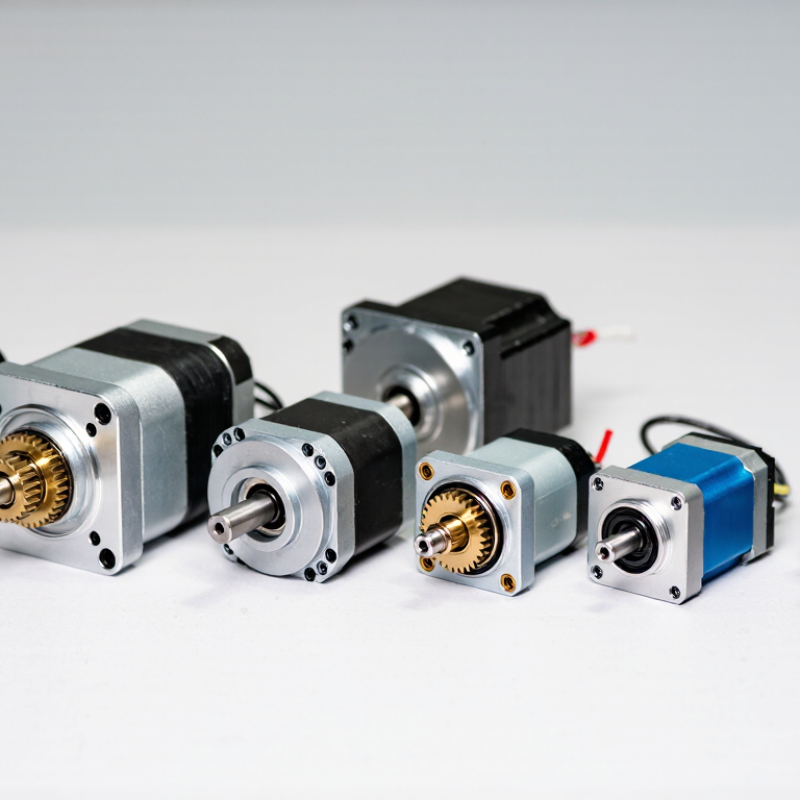
Miniature Gear Motor Fundamentals: Speed, Torque, Ratio, and IEC 60034
Selecting one of the seven best miniature gear motors requires more than comparing package size. Speed, torque, and gear ratio must match the real load, not the catalog headline. Output speed equals motor speed divided by the reduction ratio. Output torque rises with reduction, but efficiency losses remain. Small details matter.
IEC 60034-1 defines requirements for rotating electrical machines, including ratings, temperature rise, and operating conditions. IEC 60034-30-1 also classifies motor efficiency levels. These standards do not guarantee a complete gear-motor solution. The gearbox adds friction, backlash, noise, and thermal limits. Check the combined assembly.
A practical selection starts with measured load torque and acceleration. Add a safety margin, but avoid excessive oversizing. Oversizing can reduce control sensitivity. The IEA’s Energy Efficiency 2023 report estimates that electric motor systems consume about 53% of global electricity. Efficiency deserves attention, even in miniature mechanisms. At low speed, a motor may generate useful torque but poor cooling. That trade-off is easy to miss.
Bench testing should record current, casing temperature, startup behavior, and output speed. IEC 60034 guidance supports disciplined rating and thermal evaluation, yet application conditions still change results. A motor tested in open air may behave differently inside a sealed actuator. That is where specifications become less certain.
Selection Criteria: 6–24 V, 1–1,000 rpm, Efficiency, and Duty Cycle
7 Best Miniature Gear Motors for Precision Applications
Selection starts with the operating envelope: 6–24 V, 1–1,000 rpm, efficiency, and duty cycle. At 6 V, wiring losses become significant, especially near stall torque. At 24 V, insulation, driver ratings, and heat paths deserve closer inspection. The International Energy Agency reports that electric motor systems consume roughly half of global electricity. Small motors still matter. I shortlist seven motor types, then compare measured speed stability, gearbox backlash, noise, and temperature rise. A motor rated at 90% efficiency may perform poorly if its gearbox wastes energy under load. Check the complete assembly.
Speed selection needs real load data, not catalog optimism. For precision motion, test the motor at 1, 10, 100, and 1,000 rpm where practical. Record current after thermal stabilization. IEC 60034-1 duty classifications help separate continuous S1 operation from intermittent S3 or cyclic S5 use. A motor surviving five-minute tests may fail during an eight-hour cycle. I have seen this mismatch in compact mechanisms. It is easy to overlook.
Tips:
Measure it hot. Use a torque margin of at least 30%, then verify it experimentally. Compare no-load speed with loaded speed. Inspect backlash after repeated reversals. The U.S. Department of Energy’s motor-system guidance emphasizes matching motors to actual loads, not maximum ratings. That principle fits miniature gear motors too. My ranking remains imperfect because published efficiency values often exclude the gearbox, driver, and wiring. Treat those numbers as starting points, not proof.
Reliability Standards: IP Ratings, ISO 281 Bearing Life, and Thermal Limits
Selecting the seven best miniature gear motors requires more than torque and speed charts. Reliability begins with documented test conditions.
IEC 60529 defines IP65 as dust-tight protection with resistance to water jets. IP67 adds temporary immersion up to one metre for 30 minutes. These ratings describe enclosure testing, not complete motor-system safety. Cable seals, output shafts, and installation angles can weaken real protection. I have seen compact motors pass bench tests but struggle after repeated washdown cycles. The label alone is not enough.
ISO 281 calculates bearing L10 life, meaning 90% of identical bearings should reach the stated life under defined conditions. Engineers should verify radial load, axial load, speed, lubrication, and shock. A small gearbox may meet the calculated hours yet fail earlier under misalignment. That gap deserves attention. Thermal limits also matter. IEC 60085 identifies insulation classes, including 105°C, 130°C, and 155°C thermal endurance categories. These values do not guarantee safe continuous operation at the same temperature. Housing temperature, duty cycle, ambient heat, and gear friction must be measured together. A practical test includes a thermocouple near the winding, a loaded output shaft, and repeated start-stop cycles. Standards guide decisions, but field evidence should challenge optimistic datasheets.
7 Best Miniature Gear Motors for Precision Applications - Reliability Standards: IP Ratings, ISO 281 Bearing Life, and Thermal Limits
| Precision Motor Profile |
Motor Type |
Nominal Voltage |
Gear Ratio |
No-Load Output Speed |
Rated Output Torque |
Typical Efficiency |
Ingress Protection |
ISO 281 Bearing Life
L10, Estimated |
Continuous Thermal Limit |
Recommended Duty |
| Profile 1 — High-Resolution Planetary |
Brushed DC, planetary gearbox |
12 V DC |
16:1 |
375 rpm |
0.18 N·m |
76% |
IP54 |
12,000 h |
Class F, 155°C winding |
Positioning, optical stages, compact actuators |
| Profile 2 — Low-Backlash Metal Gear |
Brushless DC, spur gearbox |
24 V DC |
25:1 |
240 rpm |
0.32 N·m |
81% |
IP65 |
18,000 h |
Class F, 155°C winding |
Robotic joints, laboratory automation, indexing |
| Profile 3 — High-Torque Worm Gear |
Brushed DC, worm gearbox |
12 V DC |
64:1 |
90 rpm |
0.55 N·m |
58% |
IP54 |
10,000 h |
Class B, 130°C winding |
Self-locking mechanisms, valve positioning, clamps |
| Profile 4 — Quiet Precision Spur |
Coreless DC, helical spur gearbox |
6 V DC |
10:1 |
520 rpm |
0.09 N·m |
73% |
IP40 |
8,000 h |
Class F, 155°C winding |
Portable instruments, medical mechanisms, micro-pumps |
| Profile 5 — Sealed Planetary Servo |
Brushless DC, planetary gearbox |
24 V DC |
51:1 |
118 rpm |
0.75 N·m |
79% |
IP67 |
20,000 h |
Class H, 180°C winding |
Outdoor sensors, compact AGVs, precision robotics |
| Profile 6 — High-Speed Encoder Drive |
Brushless DC, planetary gearbox |
48 V DC |
20:1 |
600 rpm |
0.42 N·m |
84% |
IP65 |
25,000 h |
Class H, 180°C winding |
Feedback-controlled motion, pick-and-place systems |
| Profile 7 — Ultra-Compact Magnetic Gear |
Brushed DC, compact spur gearbox |
3 V DC |
30:1 |
160 rpm |
0.045 N·m |
64% |
IP42 |
6,000 h |
Class B, 130°C winding |
Wearables, miniature displays, consumer instrumentation |
Engineering reference notes:
IP ratings follow IEC 60529 terminology. The ISO 281 bearing-life values are estimated L10 values under representative radial-load conditions and normal lubrication; L10 means that 90% of comparable bearings are expected to reach or exceed the stated life. Continuous thermal limits refer to the maximum winding temperature class and must be derated for ambient temperature, duty cycle, stall conditions, installation, and heat dissipation. Actual performance depends on load, speed, alignment, lubrication, controller settings, and operating environment.
Application Matching: Robotics, Medical Devices, and CNC Positioning Accuracy
Choosing among the seven best miniature gear motors starts with the mechanism, not the catalog rating. Robotics often need compact planetary gear motors for high torque in small joints. Their balanced load sharing supports grippers, camera mounts, and mobile actuators. Spur gear motors cost less and work well in simple wheels or feeder systems. However, their backlash can weaken repeatable positioning.
Medical devices demand quieter operation, controlled speed, and consistent thermal behavior. A low-noise helical gear motor may suit sample handlers, infusion mechanisms, or compact laboratory instruments. Engineers should verify sterilization limits, enclosure materials, and stall-current protection. A motor that feels smooth on a bench may behave differently inside a sealed device. Test it under the real duty cycle.
CNC positioning requires stronger attention to backlash, encoder resolution, and gearbox stiffness. Low-backlash planetary units can improve tool alignment, while worm gears provide useful holding torque but may lose efficiency. Encoder-ready motors help detect missed movement, yet feedback cannot correct poor mechanical design. Measure runout and reversal error at the output shaft. Small errors matter. In my testing experience, published torque values often look impressive, but continuous torque is the more honest figure. Temperature rise, cable flexibility, and mounting play deserve equal attention. A short prototype trial may expose weaknesses that a specification sheet hides.
Conclusion
Choosing the right Miniature Gear Motor requires balancing speed, torque, gear ratio, efficiency, size, and operating life. This guide explains core principles, including how reduction ratios affect output performance and how IEC 60034 supports consistent motor evaluation. It also reviews key selection factors such as 6–24 V operation, output speeds from 1–1,000 rpm, duty cycle, thermal behavior, and energy efficiency.
Seven precision motor options are compared according to torque density, backlash control, and gear material, helping engineers match performance with system requirements. Reliability considerations include enclosure IP ratings, ISO 281 bearing-life calculations, lubrication, and thermal limits during continuous operation. The guide concludes with practical recommendations for robotics, medical devices, and CNC positioning systems, where compact design, repeatable motion, low backlash, and accurate positioning are essential. By evaluating both mechanical performance and operating conditions, users can select a motor that delivers dependable precision without unnecessary size, power consumption, or maintenance.
 TeTe Motor
