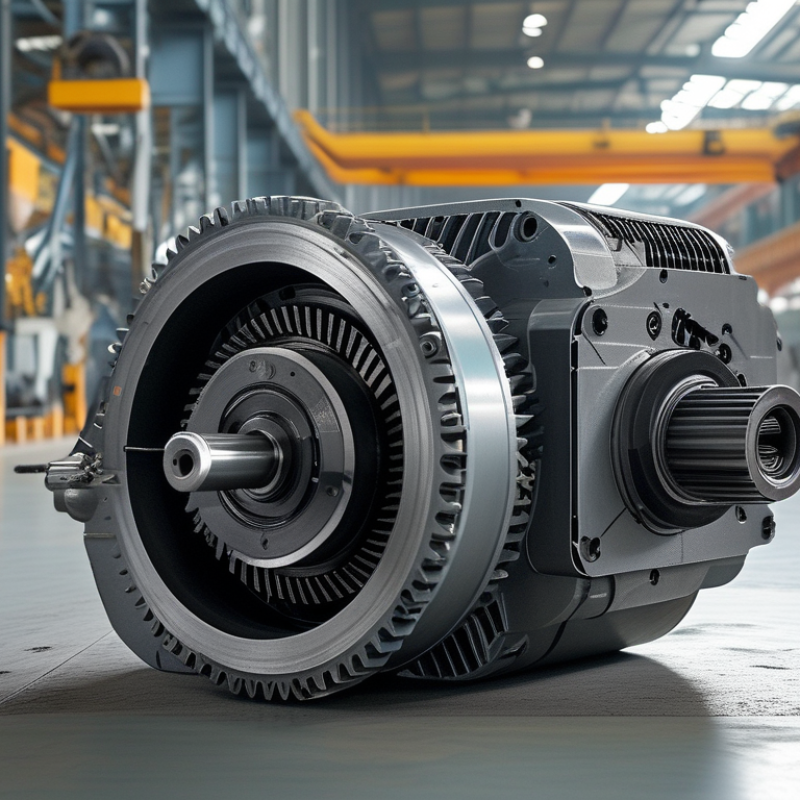
In recent years, the demand for Reversible Gear Motors has surged in China. These motors are pivotal for various industries, from manufacturing to robotics. They allow for bi-directional motion, enhancing operational efficiency and flexibility.
Reversible Gear Motors stand out due to their design. They combine compactness with robust performance, securing their place in modern machinery. However, one must consider their integration into existing systems carefully. Compatibility issues can arise if not properly assessed.
Technological advancements have powered the growth of Reversible Gear Motors. Still, the market can be unpredictable. Factors like supply chain disruptions can affect availability. Users must remain adaptive and informed. Investing in training and understanding the mechanics of these motors becomes essential. Understanding these nuances ensures smoother operations and maximizes their benefits.
Benefits of Reversible Gear Motors in Industrial Applications
Reversible gear motors are increasingly popular in industrial applications across China. These motors enable bi-directional movement, making them ideal for various tasks such as conveyor systems and robotics. According to a report by MarketsandMarkets, the global reversible motor market size was valued at over 1 billion USD in 2022 and is expected to grow substantially by 2027. This highlights a rising trend in the adoption of reversible gear motors.
One of the significant benefits of using reversible gear motors is their flexibility in operation. Industries can easily adjust the direction of movement based on specific requirements. For example, in material handling systems, these motors streamline the processes of loading and unloading goods. However, it’s essential to note that proper integration and control systems are crucial. Without them, inefficiency may occur, leading to productivity losses.
Additionally, reversible gear motors offer enhanced durability and efficiency. They often have a longer lifespan due to their robust design. A study by the International Energy Agency noted that improved motor efficiency could reduce energy consumption by up to 15%. This can yield substantial cost savings in large-scale industrial operations. Nevertheless, companies must critically assess their needs before transitioning to these motors. While the benefits are clear, the initial investment might be a concern for some smaller operations.
Increased Efficiency and Performance of Reversible Gear Motors
Reversible gear motors have gained significant traction in various industries across China. They increase operational efficiency and enhance performance in different applications. These motors offer the flexibility to change direction, which is crucial in environments requiring variable motion. This versatility can lead to improved output in assembly lines and manufacturing processes.
Efficiency is not merely about speed. It also involves energy consumption. Reversible gear motors provide high torque at low speeds, reducing wasted energy. This can lead to lower operational costs. In many cases, users report extended machinery life, as these motors experience less strain during operation. Performance improvements often result from better load handling. This ensures that machinery operates smoothly under varying conditions.
Operators do face challenges, though. Selecting the correct motor for specific tasks can be confusing. Misalignment in installation may lead to sub-optimal performance. Regular maintenance is crucial to maintain efficiency over time. Users should stay informed about best practices to get the most out of their reversible gear motors. Keeping an eye on these aspects can ensure long-lasting benefits.
Versatility of Reversible Gear Motors Across Various Industries
Reversible gear motors have gained significant traction across various industries in China. Their adaptability has made them a preferred choice. For instance, the automotive sector employs these motors for applications like robotic assembly lines. In a report by ResearchAndMarkets, the global market for gear motors is projected to reach $12.5 billion by 2027, highlighting substantial growth potential in this domain.
In manufacturing, reversible gear motors facilitate precise control of machinery. They allow for quick direction changes, which is crucial in processes like material handling. The chemical industry also benefits from the ability to reverse motor functions, aligning operations with safety regulations. According to a recent study by TechSci Research, the increased demand for automation directly correlates with a 30% rise in reversible gear motor usage.
Despite their advantages, some challenges exist. For example, the initial cost of implementation can deter small enterprises. Moreover, maintenance of these motors requires specialized knowledge. Frequent monitoring is essential to ensure operational efficiency. As industries evolve, addressing these aspects will be crucial for maximizing the benefits of reversible gear motors.
What are the Benefits of Using Reversible Gear Motors in China? - Versatility of Reversible Gear Motors Across Various Industries
| Industry |
Key Benefits |
Application Examples |
| Manufacturing |
Improved efficiency, flexibility in operation |
Conveyor systems, assembly lines |
| Automotive |
Precision control, space-saving designs |
Electric seat adjustments, window lifts |
| Agriculture |
Robust performance, high torque output |
Tractors, automated irrigation systems |
| Food Processing |
Hygienic design, variable speed control |
Mixers, packaging machines |
| Logistics |
Increased automation, energy efficiency |
Automated guided vehicles, sorting systems |
Cost-Effectiveness of Implementing Reversible Gear Motors
Reversible gear motors are increasingly popular in various industries in China. Their cost-effectiveness is a key advantage. These motors allow for both forward and reverse motion, reducing the need for multiple components. This flexibility can lead to significant savings in both material and labor costs. Manufacturers can streamline processes by using a single motor for different functions.
The implementation of reversible gear motors can also lower maintenance expenses. Fewer parts mean less wear and tear. With reduced operational complexity, companies can experience improved efficiency. Employees spend less time on repairs, leading to streamlined production. Every operational hour counts, especially in competitive markets.
Despite these advantages, it's essential to assess specific needs. Not all applications require reversibility. Sometimes, simpler solutions may be more effective and economical. Some facilities may experience challenges integrating these motors. These factors require careful consideration before making the switch. Each operation has unique demands that should guide the decision-making process.
Improved Control and Precision with Reversible Gear Motors
Reversible gear motors are gaining recognition for their ability to enhance control and precision. These motors allow for effortless switching between forward and reverse operations. This feature is particularly beneficial in applications that require constant direction changes. Industries like robotics and automation thrive on this capability, as it offers improved efficiency.
With reversible gear motors, operators gain finer control over machinery. The design facilitates smooth transitions, reducing mechanical stress. Precise movements can be achieved, ensuring tasks are executed accurately. This is crucial in fields like manufacturing, where millimeter precision can determine product quality.
However, it's essential to acknowledge potential challenges. The complexity of these systems may require specialized knowledge for maintenance. Additionally, users must ensure compatibility with existing systems. Over-reliance on technology can lead to vulnerabilities if systems fail. High precision comes with responsibilities, demanding regular checks and maintenance. The benefits are significant, but they come with a need for awareness and proactive management.
Benefits of Using Reversible Gear Motors in China
Conclusion
Reversible gear motors are becoming increasingly popular in various industrial applications due to their numerous benefits. One significant advantage is their ability to enhance efficiency and performance, allowing for smoother operation in machines that require bidirectional movement. This feature significantly boosts productivity, especially in environments where precise control is essential.
In addition to improved efficiency, reversible gear motors offer versatility across different industries, accommodating a wide range of applications from manufacturing to robotics. Their cost-effectiveness makes them an attractive option for businesses looking to optimize their operations without incurring high expenses. Ultimately, the integration of reversible gear motors contributes to enhanced control and precision, making them a valuable asset in modern industrial settings.
 TeTe Motor